
For SMBs, there is little in the budget of2026/7, which looks like a grab for money.
Key Takeaways
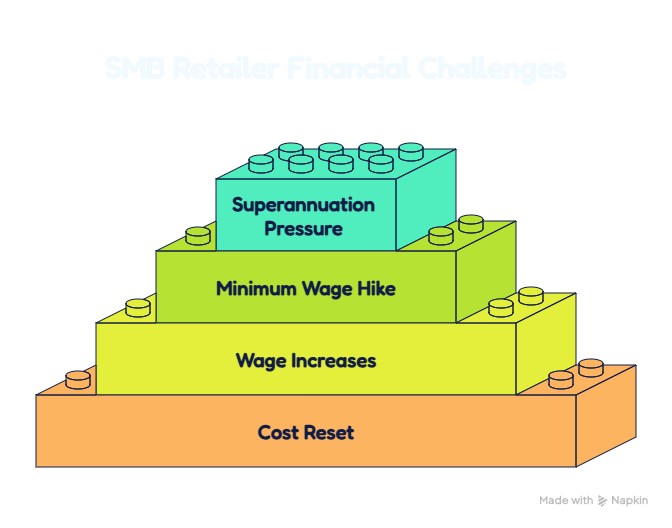
- The 2026/27 financial year for SMB retailers is a cost reset driven by higher wages, 12% super, and tighter cash flow.
- Retail Award wages rise by 4.75% from 1 July 2026.
- The National Minimum Wage increases to $26.44 per hour.
- The Superannuation Guarantee is now payable within 7 days, placing greater pressure on payroll.
How Much Will Wage Rises and 12% Super Cost SMB Retailers in 2026/27?
Award wage increases raise payroll costs and also increase super costs because super is calculated on eligible earnings.
| Cost Area | Before 1 July 2026 | After 1 July 2026 | Total Increase |
|---|---|---|---|
| Annual Wages | $90,000 | $94,275 | +$4,275 |
| Super at 12% | $10,800 | $11,313 | +$513 |
| Total Labour Cost | $100,800 | $105,588 | +$4,788 |
What will really hurt our cash flow is that this super must be paid within 7 days.
Super Calculation Formula Changes
I suggest that you use a computer program or accounting software to calculate superannuation, as the formula is changing.
Conclusion
There are some other changes to the accounting rules, but I suggest you discuss them with an accountant.
Written by:

Bernard Zimmermann is the founding director of POS Solutions, a leading point-of-sale system company with 45 years of industry experience, now retired and seeking new opportunities. He consults with various organisations, from small businesses to large retailers and government institutions. Bernard is passionate about helping companies optimise their operations through innovative POS technology and enabling seamless customer experiences through effective software solutions.