
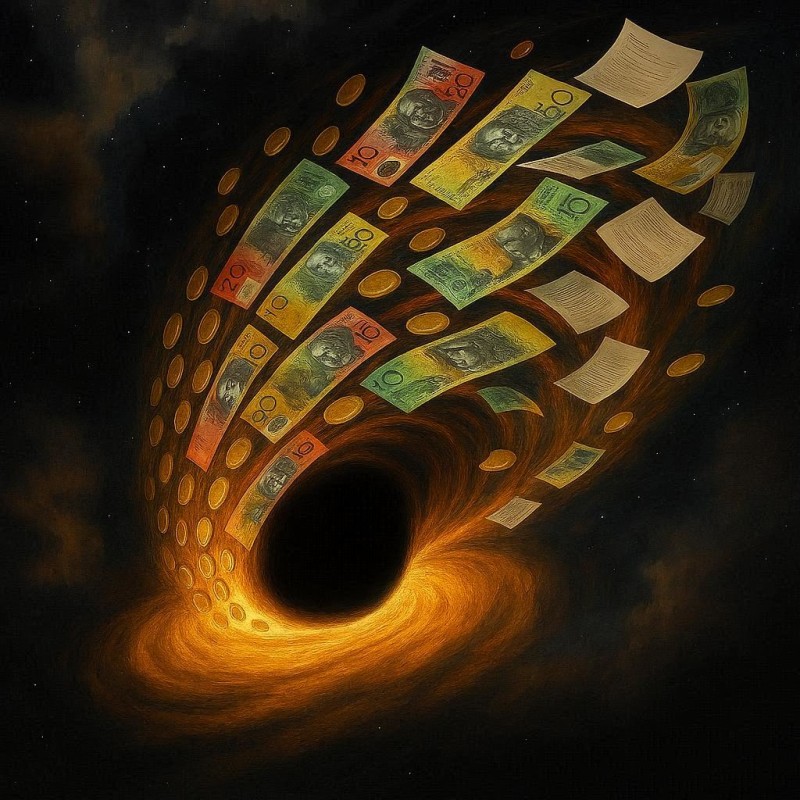
Running a retail shop in Australia can pose financial challenges that even the most experienced business owners may not anticipate. One of my clients, after spending thousands reorganising the financial structure of their new shop, was told that the costs were not tax-deductible. Actually, they were claimable as Blackhole expenditures, but it was a problem they did not expect. It paid them to get a second opinion from me
They’re real business capital expenses like legal fees or feasibility studies that don’t produce something you can touch or easily depreciate. Because of that, they can feel like money disappearing into a financial Blackhole.
What is Blackhole expenditure ATO?
Blackhole expenditure refers to specific expenses that are neither tax deductible for a business under the general deduction rules nor otherwise recoverable as the cost of a depreciating asset or CGT asset. Such expenditure may be claimed over a 5-year period if they satisfy certain criteria.
Retailers often miss these costs on their tax returns, since, say, a Point of Sale (POS) system is tangible. A payment for a shop fit-out plan that you never built isn't. Let’s look at why these differences matter and how to manage them effectively.
What Is Blackhole Expenditure?
Under Australian tax law, Blackhole expenditure refers to capital costs that can't be deducted elsewhere and don’t form part of a tangible asset’s value. They’re legitimate and often essential for your business to function or expand, but they don’t fit the usual depreciation or immediate deduction rules.
For example:
- Buying a new display fridge gives you a clear physical asset—easy to account for.
- Paying a lawyer to draft a partnership agreement gives you only paperwork. It’s essential, but it doesn’t create a depreciable asset, so it falls into the Blackhole expenditure category.
Common Blackhole Expenses in Retail
These costs often appear at three stages of a retail business journey:
Store Setup and Legal Fees
Before you even make your first sale, bills start piling up. Business name registrations, legal contract drafting, and trust or company setup costs are classic Blackhole expenditures. Without these, you can’t operate—but they don’t result in a tangible asset.
Failed Expansion or Planning
Sometimes research or consulting leads nowhere. Perhaps you pay a deposit for a shop fit to open a second shop, then cancel the project. You have nothing to show for it. These non-productive outlays are Blackhole costs.
Business Restructuring
As your shop grows, you might transition from a sole trader to a company for liability or tax reasons. The accounting and legal fees involved don’t create an asset, but they do qualify as Blackhole expenditure.
Your Five‑Year Deduction Safety Net
Thankfully, the Australian Taxation Office (ATO) now recognises these situations, as you can sometimes deduct eligible Blackhole expenditure evenly over five years, provided it’s not otherwise deductible.
Example: If you lose a $10,000 deposit on a shop fit above because you cancel the project, you may claim $2,000 each year for the next five years. It’s a slower recovery, but better than nothing.
Info: If your business closes or you sell the enterprise before the five‑year period ends, you generally lose the ability to claim the remaining deductions because there’s no longer any income to claim off.
To qualify, you need to keep detailed records showing the expense was genuinely incurred in running or establishing your business.
Blackhole Costs vs. Tangible Capital Assets
Physical assets, like shelving or POS terminals, generally qualify for faster, depreciation‑based deductions or even instant write‑offs. Blackhole expenses don’t, because there’s nothing physical to depreciate.
If you can reasonably classify a cost under another depreciation rule, you'll usually gain faster tax relief. However, be careful as misclassifying an expense can cause problems. When in doubt, get professional advice.
The Instant Asset Write‑Off Advantage
What we suggest is that if you qualify as an SMB business with an annual turnover below $10 million, you can often take advantage of the $20,000 instant asset write‑off, which is valid through to 30 June 2026. It lets you immediately deduct the full cost of eligible physical assets if you qualify.
Some expenses, such as legal or accounting costs to set up a new business or register with ASIC, may also be immediately deductible if they relate directly to establishing a business, but unfortunately not for a business restructure. Always check this with your accountant before claiming.
Smart Expense Planning for Retailers
Blackhole expenditure often sneaks up when projects don’t go as planned. Before committing large sums, consider how each expense fits into your long‑term strategy. Ask some extra questions:
- Does this create a tangible asset I can depreciate?
- Is there a way to structure this so it qualifies for faster deduction treatment?
- Most importantly, what happens if this project doesn’t go ahead?
Seek Professional Advice
Tax law is detailed, highly qualified and tightly regulated. While this will provide you with a practical overview, you should always seek advice from a qualified tax professional before making claims, something I am not and do not pretend to be.
Key Takeaways
- Blackhole expenditure covers necessary business capital costs that don’t produce tangible assets.
- You can typically deduct these under Section 40‑880, spreading the deduction evenly over five years.
- If your business closes or is sold before the five‑year period ends, you may lose these deductions.
- The $20,000 instant asset write‑off applies to physical depreciating assets, not intangible costs.
- Keep detailed records and plan ahead to minimise wasted spending.
- Always consult a professional before claiming Blackhole deductions.
Written by:

Bernard Zimmermann is the founding director of POS Solutions, a leading point-of-sale system company with 45 years of industry experience, now retired and seeking new opportunities. He consults with various organisations, from small businesses to large retailers and government institutions. Bernard is passionate about helping companies optimise their operations through innovative POS technology and enabling seamless customer experiences through effective software solutions.