Many are missing out on a simple, high-margin product category that your customers already buy elsewhere. Why not put in a clothing range to boost your shop?
Key Takeaways
- Profit margins in utility clothing
- Strategic placement of weather-ready apparel near checkout zones drives high-value impulse purchases.
- Inventory testing involves launching just 6-12 apparel units
- Point of Sale (POS) analytics required.
- Staff training focuses on practical, weather-related conversation starters to encourage add-on sales.
Clothing Retail Expansion
Everyone needs clothes. It has better sales potential and margins than most products. For example, a $60 jacket with a $30 wholesale cost delivers far more profit than selling several magazines. Ultimately, clothing is a high-margin, everyday category.
Moreover, Australia's apparel market remains a stable investment for local shops.
Select the Right Clothing Category?
What you want is something that increases your average basket size by turning routine, low-spend visits into higher-value transactions. For example, a customer buying a birthday card would notice a lightweight jacket. If it's cold and wet, they will often grab it.
Utility clothing sells best because it solves immediate, everyday needs without requiring a changing room.
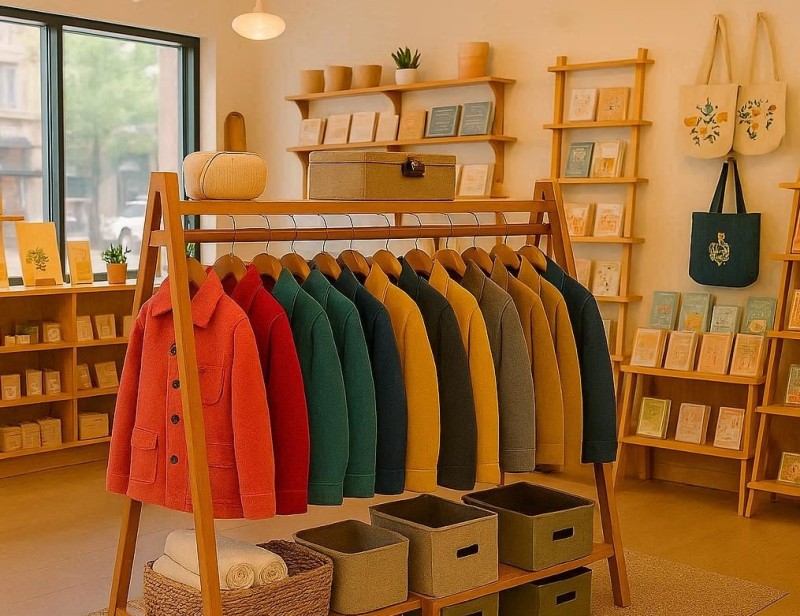
Clothes displayed by hanging save shelf space. Choosing the right clothing category involves picking a narrow, practical niche that matches your existing customers. Study similar retailers for proven, low-risk ideas.
How Should You Test a Clothing Range?
Testing a clothing range means starting small and measuring concrete results before committing to a larger order. For example, introducing just two jacket styles in limited quantities drastically reduces your financial risk.
Define a Test Range
Start your test with just 1–2 product types and 2–3 colours, for a total of 6–12 units. For example, order a handful of adult wind-resistant jackets and a matching kids' version. Treat this strictly as a 3-6 month seasonal test.
How Do You Source Clothing Brands for Your Shop?
Sourcing clothing brands involves partnering with wholesalers who can actively support you. For example, local Australian outerwear brands often supply boutique hardware stores or newsagencies without demanding massive minimum orders.
Where to Find Brands
Look for independent labels, outdoor brands, or local suppliers. For example, check a brand's website for "stockist" or "apply to stock" pages. When contacting them, always ask about minimum order quantities, delivery fees, and consignment options. Be careful, as in my experience, many of these suppliers will, if they think you do not know, try to get you to take unsalable stock. Most clothing suppliers are sitting on such stock. Conversely, you can get such stock at a very good deal. If so, they work well in a dump box.
What Pricing Strategy Works Best for Clothing?
Clothing pricing works best when you balance perceived affordability with strong retail margins. For example, a jacket bought for $30 wholesale can comfortably retail for $54–$66.
How Should You Display Clothing in a Store?
Clothing displays should be simple, highly visible, and tied directly to existing customer flow. For example, placing jackets on a small vertical rack near your greeting-card wall captures customers who are already browsing.
First, use folded-stack displays or small racks with clear, benefit-driven signage. For example, use a sign that reads: "Light wind-resistant jacket for school runs and park days." Keep the range feeling like a helpful add-on rather than a demanding fashion section.
Utility Clothing vs. Fast Fashion in Small Retail Stores
Utility clothing focuses on practical, weather-resistant garments designed for everyday use, while fast fashion offers trend-driven apparel with shorter lifespans. When comparing the two, utility clothing offers a longer shelf life, lower inventory risk, and higher, more consistent sell-through for non-fashion retailers.
A POS System Helps Manage Clothing Sales
Your Point of Sale (POS) system is very important here as clothing is such a specialised product with sizes, colours, styles, etc. It does not take much to have many combinations. Five sizes, male and female, five colours, and four styles give you 200 combinations. Automatically analysing sales data, predicting demand, and recommending reorder quantities across 200 combinations is a lot of work for a small department, and in clothing, you need to analyse in real time. You also need to be ruthless here in getting rid of unsellable stock, as it takes up a lot of room.
First, use your system's sales reports by SKU to eliminate guesswork. Our advanced POS systems will identify trends for you.
Conclusion
Clothing can increase revenue. Start small, focus purely on practicality, and let your POS System guide you.
Written by:

Bernard Zimmermann is the founding director of POS Solutions, a leading point-of-sale system company with 45 years of industry experience, now retired and seeking new opportunities. He consults with various organisations, from small businesses to large retailers and government institutions. Bernard is passionate about helping companies optimise their operations through innovative POS technology and enabling seamless customer experiences through effective software solutions.